CYGNO04: looking for the direction of dark matter
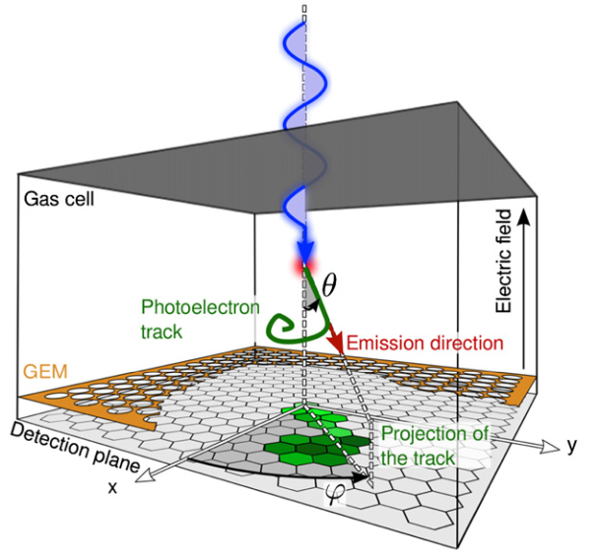
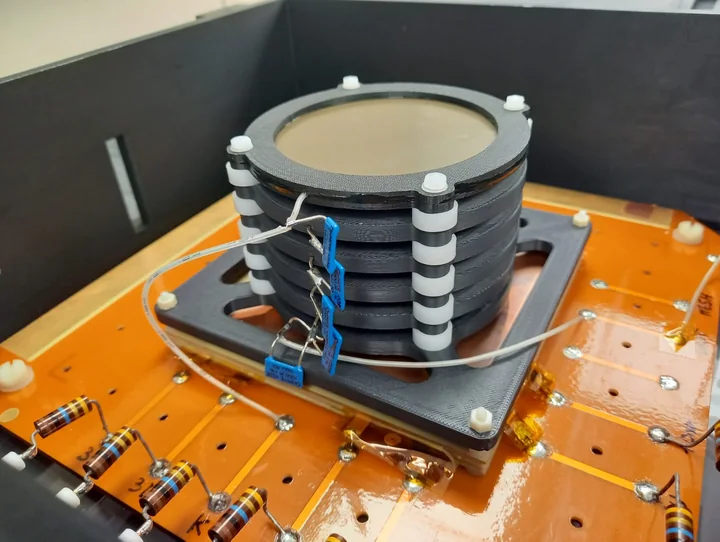
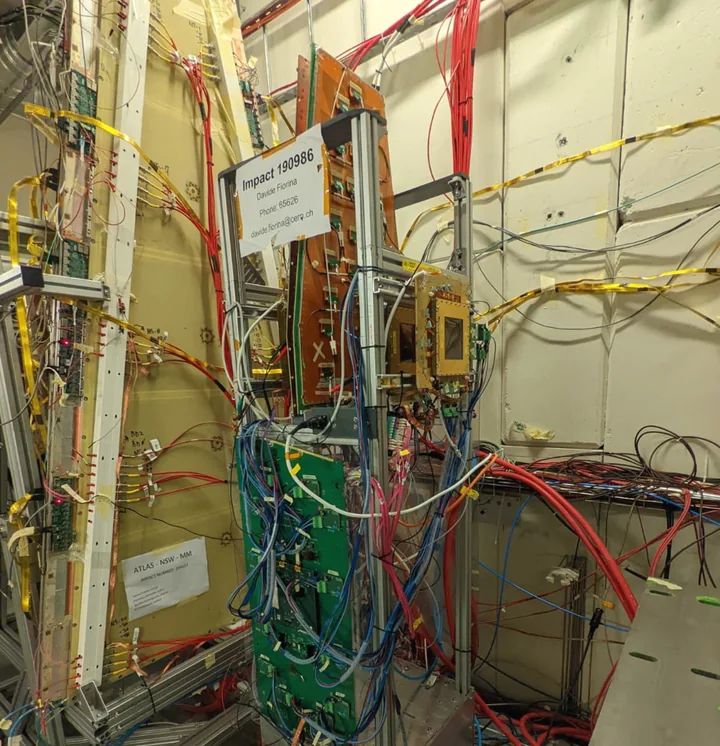
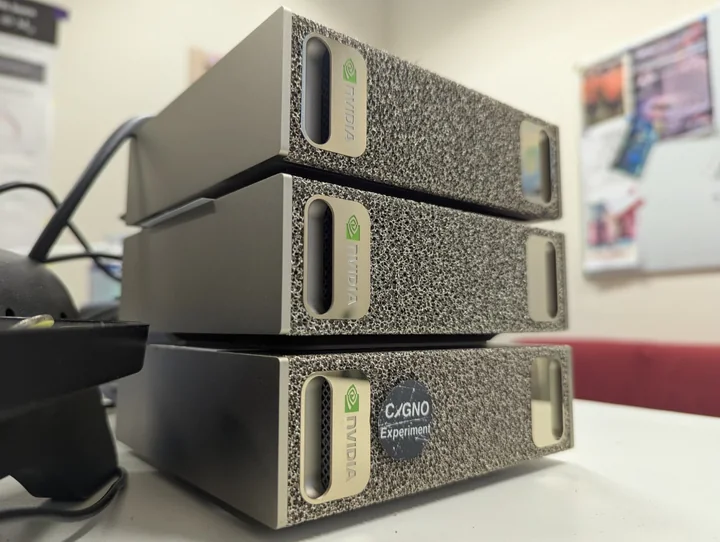
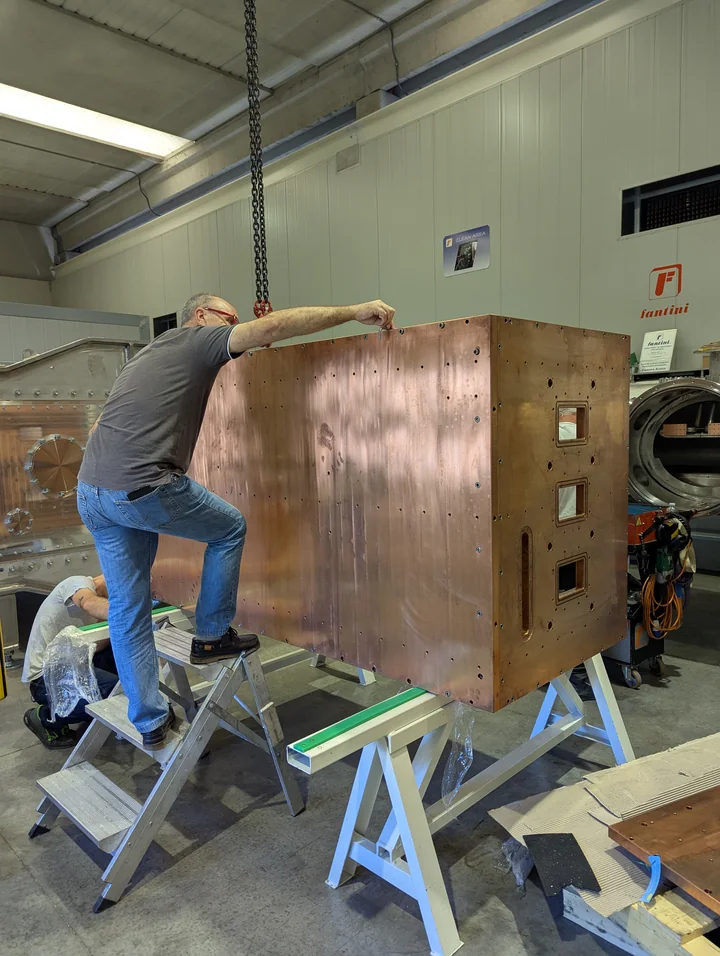
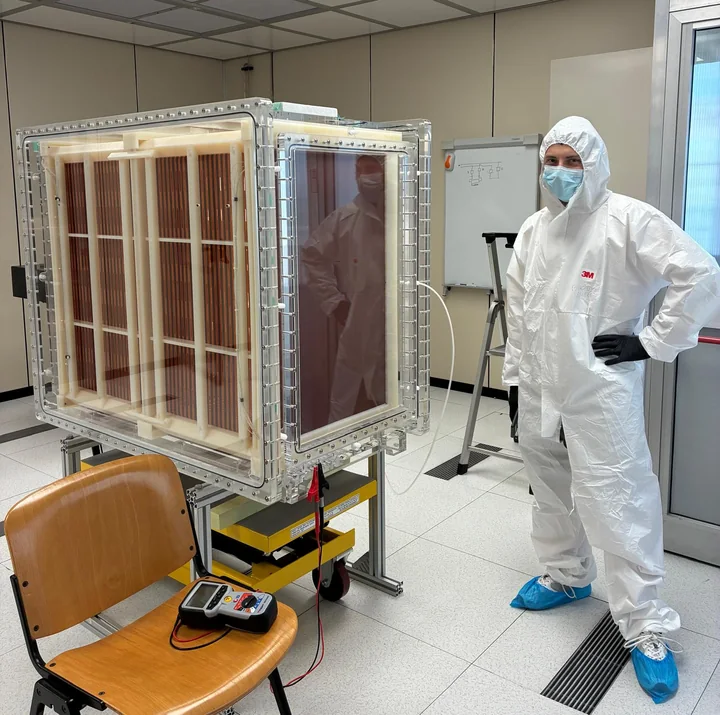
CYGNO04 is a 400 L demonstrator under construction at the Gran Sasso National Laboratory (LNGS). It will bring optical tracking into a larger detector for rare-event searches underground.
An illustration of the Galactic halo and the apparent dark matter wind in the Solar System’s frame.
A dark matter halo surrounds the visible Galactic disk. The Sun moves through this halo. Changing to the Solar System’s frame gives an apparent incoming wind. The sightline towards Cygnus points outwards, while the incoming particles travel towards the observer. This directional pattern is the motivation for measuring recoil directions. The animation uses an illustrative halo model.
By Davide Fiorina · Animation & source · CC BY 4.0
If a dark matter particle scatters from an atomic nucleus in the gas, the recoiling nucleus could leave a tiny track. Across many events, those directions could help distinguish a signal from ordinary radiation. The animation shows why the Solar System’s motion through the Galactic halo gives an apparent incoming “wind”.
Building and sharing the experiment
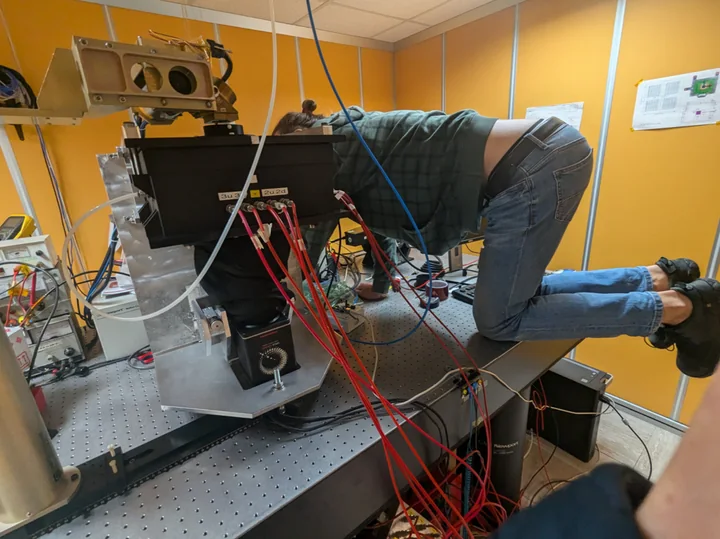
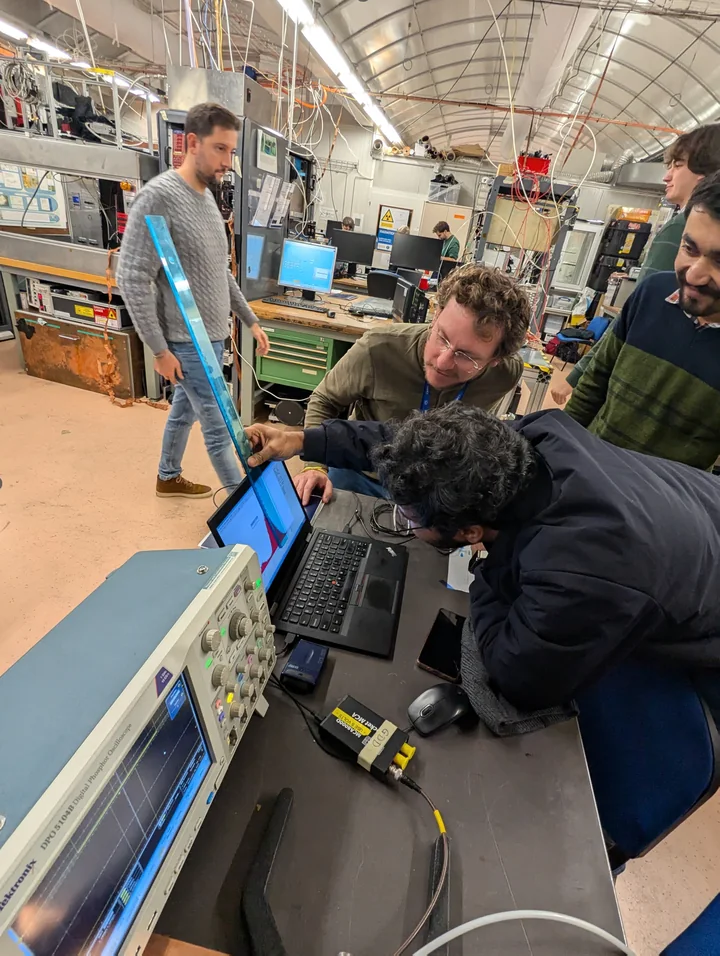
As Technical Coordinator and Project Manager, I coordinate detector assembly, gas and high-voltage systems, readout and laboratory services, working with the team from procurement through commissioning.
I also designed and manage the CYGNO website and manage @cygno.exp on Instagram, where we share the experiment and the work behind it.